
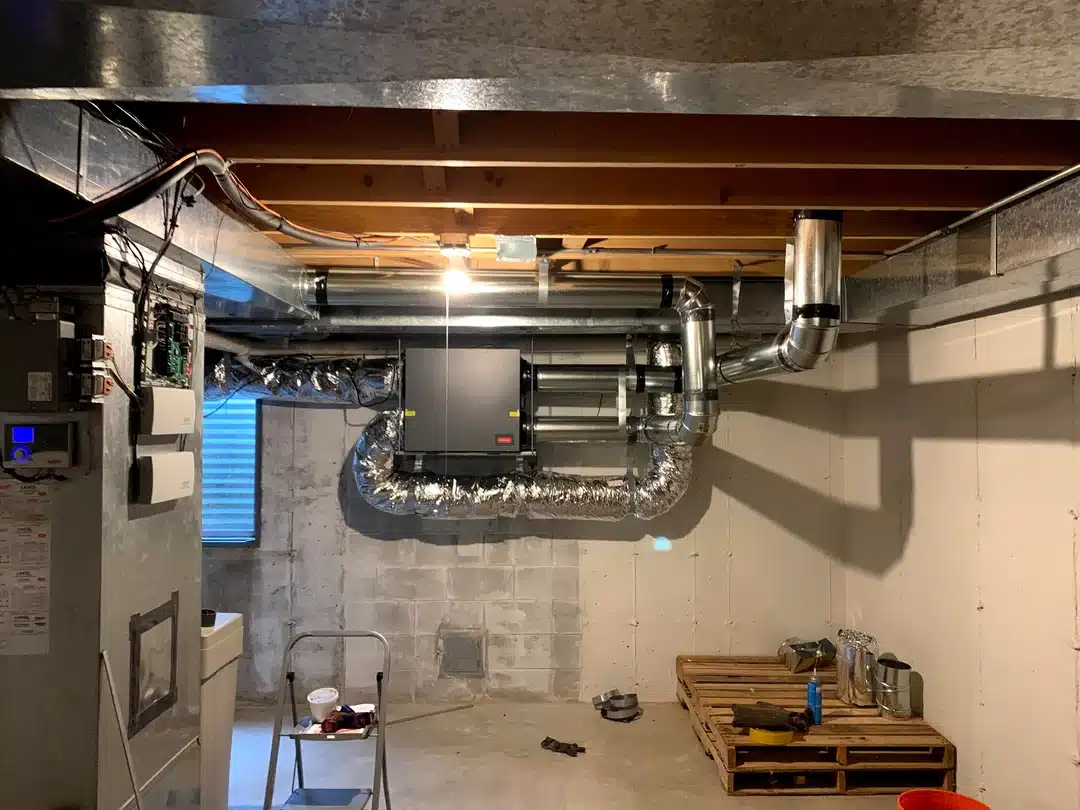
If you’re a homeowner in Ontario, deciding between an HRV (Heat Recovery Ventilator) and an ERV (Energy Recovery Ventilator) can be tricky. Both systems improve your home’s indoor air quality by replacing stale indoor air with fresh outdoor air, but the real difference comes down to how they manage humidity.
In a climate like Southern Ontario, where summers are hot and humid, and winters are cold and dry, picking the right system is crucial for keeping your home comfortable year-round. Let’s break down the key factors to consider.
What’s the Difference Between an HRV and an ERV?
Before we get into which system is best for your home, let’s quickly cover the basics:
- HRV (Heat Recovery Ventilator): An HRV transfers heat between the outgoing stale air and the incoming fresh air. It does not transfer moisture, making it better suited for homes where you need to lower humidity levels.
- ERV (Energy Recovery Ventilator): An ERV transfers both heat and moisture, which makes it ideal if you want to maintain some indoor humidity. It helps balance moisture levels inside, which can be especially useful in very dry or very humid climates.
The easiest way to decide between which system is right for your home in Ontario, is to look at two different situations:
1. Is Your Home Too Humid in Winter? Choose an HRV
In Ontario winters, homes are often sealed tight to keep the heat in. This can trap moisture inside, making the air feel muggy and leading to issues like condensation on windows. If your home feels too humid in the winter, an HRV is probably the better option for you.
HRVs work by exhausting stale, humid air outside while bringing in fresh, dry air from outside. This helps to reduce the moisture levels in your home, creating a more comfortable living environment during the colder months. If humidity is a recurring issue, especially in an older, more airtight home, the ability to remove excess moisture is a big advantage.
2. Is Your Home Too Dry in Winter? Choose an ERV
On the other hand, if your home feels too dry in the winter—resulting in dry skin, static electricity, or chapped lips—an ERV might be the better choice.
In Ontario’s cold winters, the outside air tends to be dry. An ERV helps retain some of the moisture from the stale indoor air and transfers it to the fresh incoming air. This means you’re not bringing in cold, dry air constantly, which helps prevent your home from drying out further. For homeowners dealing with low humidity issues in the winter, an ERV offers a way to keep the air feeling more balanced and comfortable.
OK. But, what about the summer? It’s always so humid in Ontario.
This is definitely an important aspect of the decision, so let’s take a closer look.
Summers Are Humid in Southern Ontario: ERV is Your Best Bet
Ontario summers are known for their heat and humidity, and in this case, an ERV is likely your best option.
An ERV helps limit the amount of moisture entering your home by transferring some of the humidity from the incoming air to the outgoing stale air. This feature makes ERVs ideal for hot, humid climates like Southern Ontario’s summers, where controlling indoor humidity is incredibly important.
Need help from the pros?
If you're reading this post and have questions then reach out to get them answered by our family-owned and operated team. We can answer your questions and arrange a free, no-obligation quote at any time.
HRVs and ERVs do not Completely Control Humidity
While both HRVs and ERVs help manage indoor humidity levels, it’s important to understand that neither system can completely control humidity. These systems are designed primarily for ventilation, not dehumidification or humidification.
When to Consider a Dehumidifier
During Southern Ontario’s humid summer months, an ERV can reduce the amount of moisture entering your home, but it may not be enough if you’re dealing with excessive indoor humidity.
In this case, a dehumidifier might be necessary to remove moisture from the air. You can install a standalone dehumidifier or opt for a whole-home dehumidifier that integrates directly into your HVAC system to ensure your entire home is covered.
When to Consider a Humidifier
Similarly, in the dry winter months, if your home becomes too dry, even with an ERV preserving some moisture, you might need a humidifier.
A whole-home humidifier can be installed directly into your HVAC system to automatically adjust humidity levels when the air becomes too dry. Alternatively, you could use standalone units in specific rooms.
If you’re having issues controlling humidity in your home in winter, you can also check out our article on the 7 Best Ways to Reduce Humidity in Your Home in Winter.
Programmable Thermostats to Control HRVs and ERVs
Both HRVs and ERVs can run continuously, but that’s not always necessary. In fact, running an HRV continuously in the summer can invite moisture issues in your home.
By integrating a programmable thermostat instead, you can fine-tune when and how often your system operates. This is especially important for controlling humidity and energy use.
For example, instead of running them 24/7, you can set the system to run for just 10-20 minutes per hour, depending on the air quality and humidity in your home. Here’s how this helps in different seasons:
- In Winter with an HRV: If your home is too humid, running the HRV continuously might help reduce moisture, but setting it to run periodically (e.g., 10 minutes per hour) can still keep humidity in check without over-ventilating and losing too much heat.
- In Winter with an ERV: An ERV helps maintain humidity. Using a programmable thermostat ensures that it only runs as often as necessary to keep moisture balanced, preventing over-drying while still ensuring fresh air exchange.
- In Summer with an ERV: During Southern Ontario’s humid summer months, an ERV can be set to run periodically to control indoor humidity. A programmable thermostat allows you to reduce the runtime, preventing the system from overworking while still keeping moisture levels in check.
- In Summer with an HRV: Since HRVs don’t handle humidity as effectively in summer, using a programmable thermostat to limit its operation is key. You can set it to run less frequently to avoid bringing in too much outdoor humidity.
Modern HRV and ERV systems are likely to come with programmable thermostats, so this shouldn’t be an issue. Keep in mind it’ll also take some trial and error to figure out the best settings for your particular home, energy and air quality needs.
Which System is Right for Your ontario home?
Ultimately, deciding between an HRV and an ERV comes down to your specific home and needs. If your home tends to be too humid in winter, an HRV may be the better option. If your home is too dry in the winter or you’re looking for better summer humidity control, an ERV is likely the way to go.
It’s also essential to remember that every home is different. Consider factors like your home’s age, size, the number of occupants, and your energy usage when choosing the right system.
While both HRVs and ERVs improve ventilation, they work best when combined with other systems—such as humidifiers, dehumidifiers, and programmable thermostats—to fully control your indoor air quality.
As always, it’s a good idea to consult with an HVAC professional to assess your home’s specific needs and ensure you’re making the right choice.
Contact us below to book an assessment!