Why is my house so humid in winter?
The summer is long over and you don’t expect to still be battling humidity issues in your home. For some, their home is actually too dry in the fall and winter. But for others, humidity remains an issue.
But what exactly is causing it? There are a few reasons that could be the cause including:
1. Limited Ventilation
During winter, homes are often sealed tightly to keep the cold air out and the warm air in. While this is great for energy efficiency, it can greatly reduce ventilation. Without fresh air circulating, humidity generated inside your home from daily activities has nowhere to go, leading to higher indoor moisture levels.
Over time, this lack of airflow causes humidity to build up, which can contribute to condensation on windows and dampness in walls.
2. Condensation
As warm air inside your home comes into contact with cold surfaces, like windows or poorly insulated walls, condensation forms. This happens because warm air holds more moisture than cold air. When it cools down rapidly on contact with a cold surface, it releases that moisture as water droplets.
Over time, this moisture can increase indoor humidity and even lead to issues like mold or mildew if not managed properly.
3. everyday Indoor Activities
Everyday household activities like cooking, showering, and washing dishes release significant amounts of moisture into the air. In winter, because homes are often closed off to conserve heat, this moisture lingers indoors.
Without adequate ventilation or moisture control, activities like boiling water, taking hot showers, or even using a dishwasher can quickly increase the humidity inside your home.
4. Drying Clothes Indoors
In colder months, many people opt to dry their clothes indoors rather than using an outdoor clothesline. While this is convenient, it adds a lot of moisture to the air. As clothes dry, they release water vapour, which contributes to indoor humidity.
The smaller the living space, the more noticeable this effect becomes. Using a dryer with a proper venting system or a dehumidifier can help manage this issue.
5. Other Moisture Sources
Different kinds of hidden moisture sources around your home can also lead to higher humidity levels during winter. For example, leaky pipes, unsealed crawl spaces, or even some types of houseplants can release moisture into the air.
Also, unvented appliances like space heaters or gas stoves can introduce moisture, especially if they are used for extended periods in poorly ventilated areas.
What Is the Ideal Indoor Humidity Level During Winter?
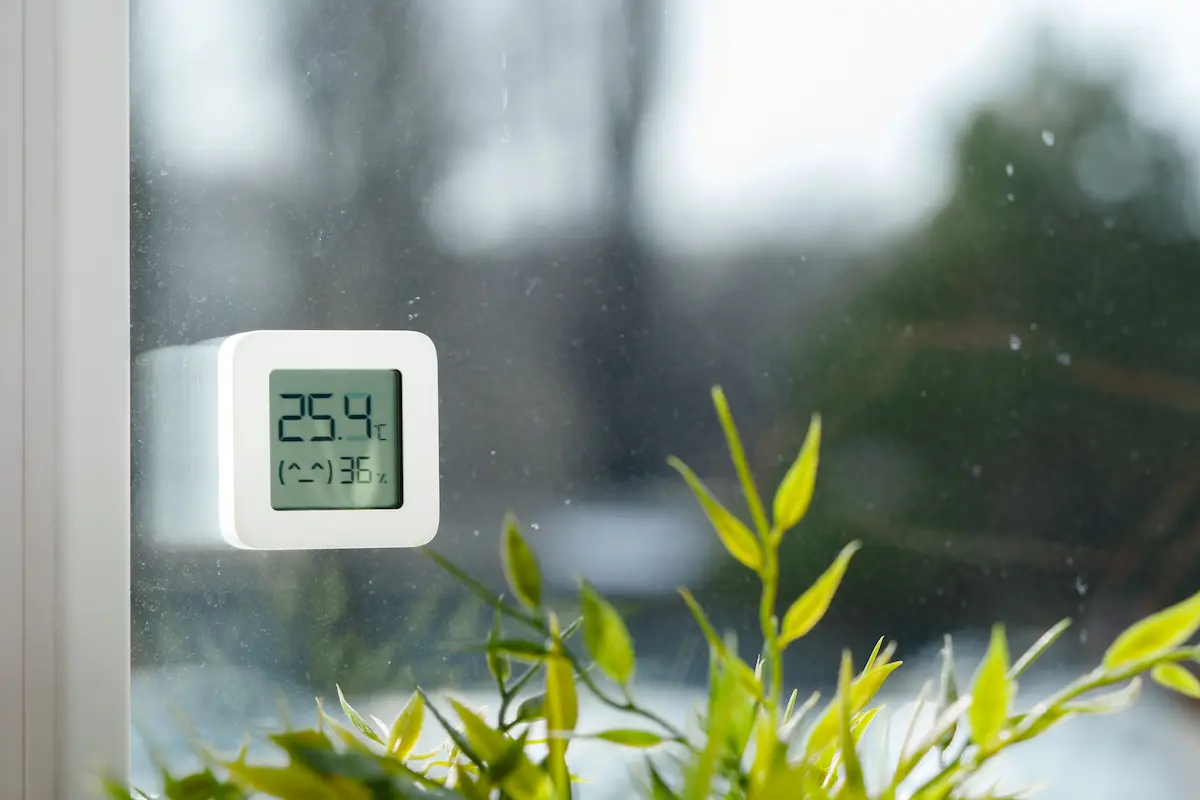
There is no perfect or exact number but the general ideal range during winter is between 30% to 40%. This range is typically a nice balance between comfort with health, preventing issues like dry skin and static electricity while discouraging mold growth and dust mites.
How to reduce indoor humidity in your home in winter
Here are 7 ways to help reduce indoor humidity levels in your home in cold weather:
1. Turn Up the Heat
Raising the temperature inside your home can help reduce indoor humidity by increasing the air’s capacity to hold moisture. Warm air absorbs moisture more effectively than cool air, which helps prevent condensation from forming on windows and other cold surfaces.
2. Use a Dehumidifier
A dehumidifier is one of the most direct ways to control indoor humidity. It works by pulling moisture from the air. Dehumidifiers are very useful in high-humidity areas like basements or poorly ventilated rooms. For winter, using a small to medium-sized dehumidifier in those areas can make a big difference.
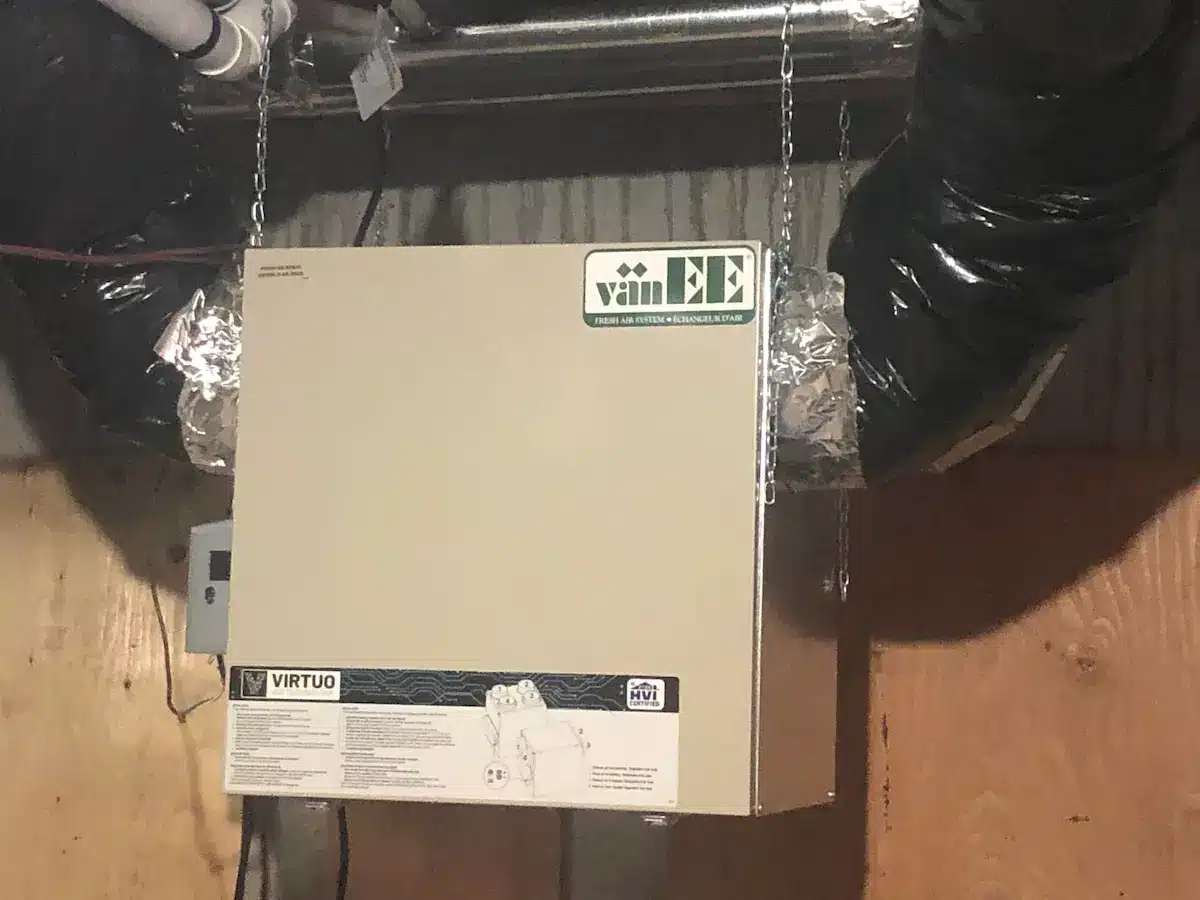
However, if you want something that will help with humidity levels throughout the entire home, there are whole house options. These work by tapping into your ducting system. You can also help remove humidity with an HRV (Heat Recovery Ventilator). Learn more about HRV systems and if they’re right for your home.
3. Ensure Proper Drainage around your home
Indoor humidity levels can be affected by excess moisture buildup outside of your home. Make sure that water is draining away from your home’s foundation and that there are no leaks in your roof, gutters, or downspouts.
Any moisture entering the house from the outside can raise indoor humidity, so maintaining good drainage can help keep your home dry in the winter.
4. Insulate Your Pipes
Cold water pipes can become a source of condensation, especially in poorly insulated areas of the home. Insulating your pipes helps prevent condensation from forming on them. When moisture condenses on pipes, it can add humidity to the air.
5. Upgrade Your Windows
Old or inefficient windows are often a big culprit for condensation. Double- or triple-paned windows, along with weather stripping, create better insulation, reducing the amount of cold air that enters and the warm air that escapes. With upgraded windows, you’ll see less condensation and fewer humidity-related issues in the winter.
6. Improve Ventilation with Exhaust Fans
Areas like kitchens, bathrooms, and laundry rooms generate a lot of moisture from cooking, showering, and using appliances. Installing or using exhaust fans in these areas helps to quickly remove excess moisture from the air, preventing it from spreading throughout the house.
7. Use Moisture-Absorbing Houseplants
Some houseplants naturally absorb moisture from the air through their leaves. These plants are a natural, eco-friendly way to reduce humidity levels indoors. While they can’t handle large amounts of moisture, strategically placing these plants in humid areas can help to subtly reduce indoor humidity levels while adding greenery to your home.
not sure what to do? give us a call
There can be many reasons for persistent humidity during winter. So, before you do something expensive like replace all your windows, we can inspect your HVAC system and help you with a plan to tackle pesky indoor humidity.
We serve the entire Greater Toronto Area, so give us a call and one of our licensed technicians will stop by for a free consultation.